


The Chablis Conundrum

Updated: Apr 16

Are you even aware there IS one?
I recently attended the wine trade event Grands Jours de Bourgogne, a week of massive wine tastings throughout the villages and vineyards of Burgundy, France. Day 1 began with a delightful afternoon sampling mostly current releases from dozens of producers in Chablis—some familiar names, some not yet exported to the U.S.
As a wine professional with decades of experience, I had certain expectations about this classic spot. I wanted to be enchanted by the chalky mineral oyster-shell expression of the Kimmeridgian soil and the category’s signature electric acidity. And I frequently was.
But… not as much as I’d hoped.
Yes, warming temperatures from climate change are an undeniable factor. Simply, the grapes are getting ripe more easily, leading to richer fruit flavors, slightly higher alcohol, and a rounder mouthfeel. These elements don’t always play well with the elegance and lemon-scented minerally precision of historic Chablis character.
Out of the 60 wines I tasted that afternoon, none of them offended me—on that beautiful Spring day I would have happily taken any glass outside to sit for a while in the sun. But too many left me, well, bored.
I started wondering if the success of “Chablis” is maybe its downfall? In the U.S., most wine drinkers are familiar with the name. Even if they don’t know much about where it is from or how it is made. Or even, what the grape variety is. (If I had a dollar for every time I’ve heard, “I don’t like Chardonnay. But I love Chablis!” I’d buy a house in France and you all could visit. But I digress.)
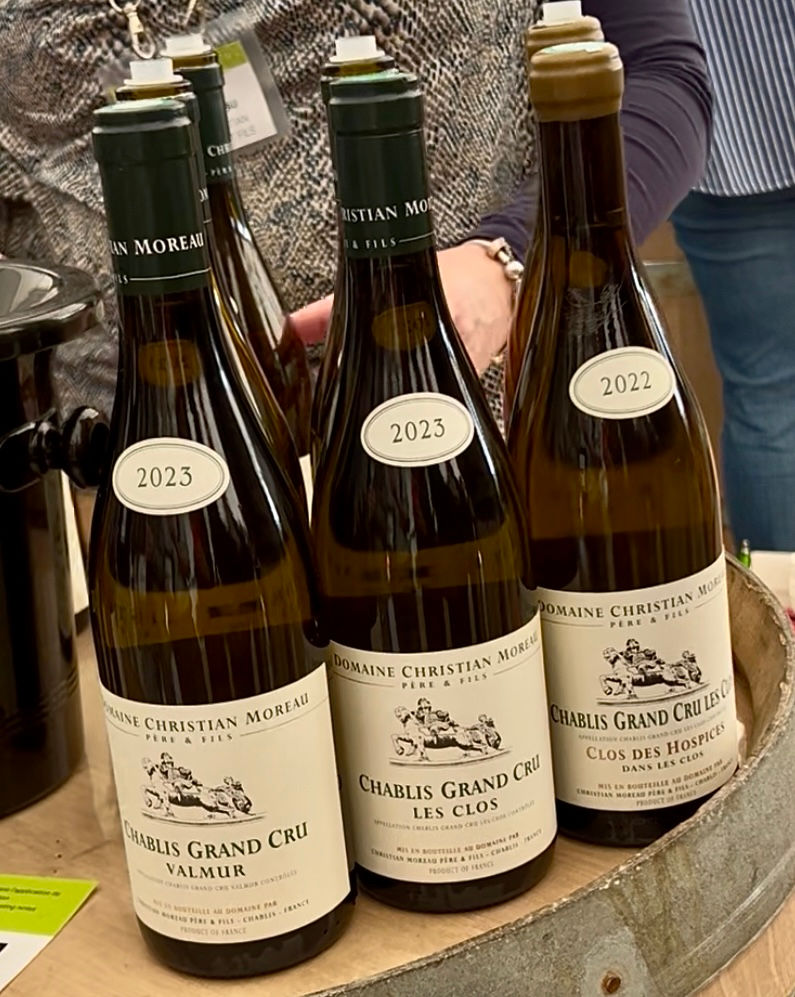
Working with Flatiron Wines & Spirits in NYC, I have witnessed person after person open the fridge and grab any ol’ bottle of Chablis. They almost never ask about the producer or designation. They may mutter that the price point has risen over the past few years. But to them, every bottle of Chablis is pretty much the same.
Even a customer who might want a top tier Premier Cru or Grand Cru Chablis still doesn’t seem to care much which location or producer it’s from. Vaillons or Valmur? Picq or Moreau? They don’t seem to know—or care about—the difference. To many folks, is there a notable one?
But Chablis flies off the shelf. So, the category sells itself. Bravo, Chablis, you’ve reached an enviable position! But it seems the nuances have gotten lost along the way. And it’s almost impossible for a consumer to tell which bottle is going to be a really good—or meh—version. Because, let’s face it, there is unfortunately a sea of meh Chabs out there.
During the afternoon, I spent some time tasting with a friend who is a European distributor looking for producers to add to his portfolio. I wondered if some of his targeted labels would fly in the U.S. It begged the question, with such a saturated market and seeming lack of care for nuance, how on earth could a new, small producer break into the scene? They would really need to find a champion importer who was willing to sell, sell, sell. But would it matter? Would they be able to compete for shelf space with the bigger names?
So, the conundrum: the bleak view is,
Chablis sells itself, but no one cares what it is selling.
Yep, I said it.
The GOOD news is, there were a number of wines that gave me everything I was looking for. If you want to avoid the “meh” and enjoy some concentrated, energetic, gorgeous Chablis, I will list some of my favorites below. But I need you to tell me—what would make you care enough to learn the differences between the vineyards? And would that edification work, or be worth it in the end? How on earth could we make this stuff “stick?” What would justify your spending more than usual to choose a gorgeous Chablis over a meh one? And, how can you tell the difference?
I do not have those answers now. It will either be a thoughtful process (on both our ends,) or we’ll just linger in this odd place of popularity being the worst thing to happen to a region.
At the end of the day, I will still drink Chablis, and I expect you will too. But do yourselves a favor, and don’t just grab any ol’ bottle — expect more from your Chabs, give it a touch more attention, and you may be well-rewarded.
TASTING NOTES:

A handful of producers brought some back vintages, and it was lovely to experience these wines with a few years of age. But as per typical trade tastings, we mostly sampled the current 2023 and 2024s. In general, 2023 was a generous vintage, “easy” to make wine — but possibly harder to make a “great” wine. 2024 was more challenging, but the wines I tasted presented well overall. I personally tended to prefer good Premier Crus (PC) over Grand Crus (GC), but that may be because those top sites need more time to express themselves! Here are some of my favorites, in no particular order:
2024 Christian Moreau & Fils, Chablis Les Vaillon PC. Herby, tart, concentrated, perfumed, puckery, lovely. Not yet released (NYR).
2023 Christian Moreau & Fils, Chablis Valmur GC. Elegant, chalky, laser-like minerality. (Valmur is Fabien Moreau’s “favorite child” vineyard as “it’s always the most expressive.”) ~$150
2017 Jean Dauvissat Chablis Vaillons PC. Lemon verbena, tangy and rich, knife edge precision, lemon curd finish, interesting journey. $N/A
2019 Jean Dauvissat Chablis Vaillons PC. Subtle fruit, but amazing lemony concentration. (Dauvissat brought four vintages of the same Premier Cru – fascinating to taste them together!) $N/A
2023 Simmonet-Febvre Chablis Preuses GC. Smoky-flinty vibe, savory edge, tangy and concentrated. ~$105
2023 Lavantureux Chablis Fourchaume PC. Love the perfume on the nose, lemon, pear, very nice. (I wrote “nice” on almost every wine of theirs!) ~$75
2024 Billaud-Simon Chablis Tete d’Or. Lemon and herbs, energetic, a little spicy, great tension. (From his best plots with a little longer aging.) ~$50
2024 Billaud-Simon Chablis Monte de Tonnerre. Ooh, dark minerals! Very concentrated, really cool. (The one label Olivier Bailly puts in his own cellar every year.) ~$80
2025 Vincent Wenger Chablis Quintessence. From his best parcels – love the nose, ripe pear, but elegant with a long finish. Of course, the ‘25s are still babies! NYR.
2022 Dampt Freres Chevalier d’Eon Bourgogne Blanc. A parcel by Tonnere. Good intensity, lemon and herbal, with a pithy finish I liked. ~$25
2022 Dampt Freres Chablis Ct. De Lechet PC. Light stone fruit, apricot and peach, handles that fruitiness well. ~$60
2021 Dampt Freres Chablis Blanchot GC. Tangy reduction, very concentrated and layered over a long finish (the abv felt a scootch warm, but that contributed to its intensity.) ~$80
2023 Maison Brocard Chablis Vau de Vey PC. Love the nose – ooh, love the mouth! Great fruit and minerals and balance and finish. Got a “heart.” ~$40
2024 Maison Brocard Chablis Grenouille GC. Little caramel edge, rich, luxe, wow. Also got a heart. NYR
Cheers!


Great article, glad you’re not afraid to say the difficult things… been having trouble finding consistency in lots of high quality but popular regions lately (Sancerre too.)